
The Global Guide to Flight Compensation: How to Get Paid for Delays, Cancellations, and Overbooking
Trippwiz Editorial
22 Jun 2026 • 10 min read
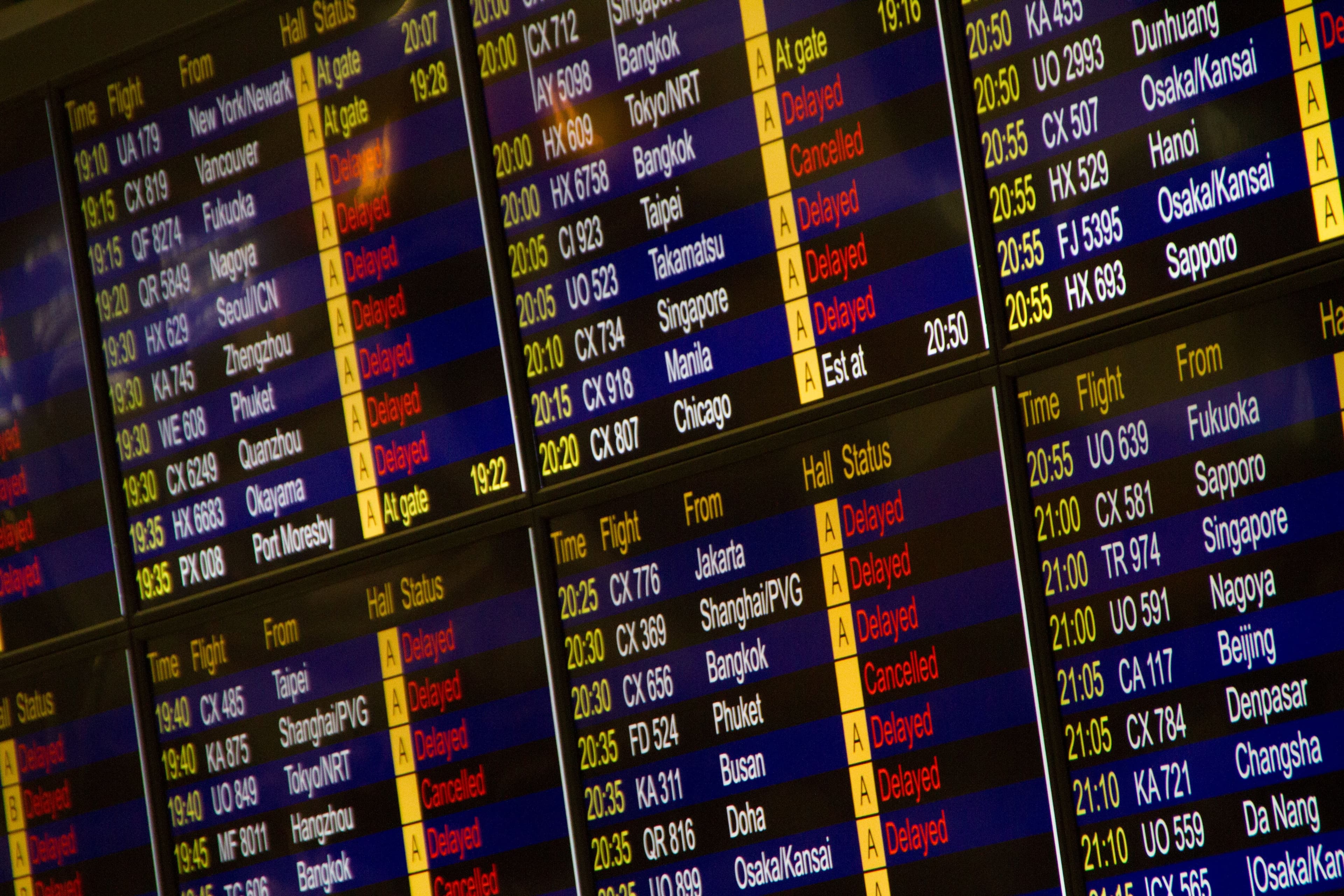
Your flight has just been cancelled. The gate agent looks flustered. The departure board flashes "DELAYED" in angry red letters. Now what?
Most travelers don't know that their airline ticket is actually a contract—and when that contract is broken, you're often owed real money. Not vouchers. Not miles. Cash.
Over the past two decades, passenger rights have expanded dramatically across the globe. Yet the vast majority of eligible claims go unfiled every single year. Why? Confusion. Airlines bank on it.
Let's cut through the noise. Here's your global playbook for getting paid when your flight goes sideways.
EU261: The Gold Standard (and Why It Matters to You)
If your flight departs from an EU airport—or arrives at one on a European airline—you're protected by EU Regulation 261/2004. This is the most passenger-friendly law on the planet, and it applies even if you're not European.
The compensation structure is refreshingly simple:
| Distance | Compensation |
|---|---|
| Up to 1,500 km | €250 |
| 1,500–3,500 km | €400 |
| Over 3,500 km | €600 |
Here's the catch: You only get paid if the disruption was the airline's fault. Extraordinary circumstances—severe weather, air traffic control strikes, political instability—are exempt.
The 4-Hour Delay Rule: If you arrive at your final destination 4+ hours late, your compensation gets slashed by 50%. Three hours late? You're still owed the full amount. (This is why knowing what to do if flight is delayed 4 hours is critical—your rights shift at that threshold.)
The 3-Hour Test: For cancellations, if the airline offers you a reroute that arrives within 2 hours of your original time (short haul) or 4 hours (long haul), compensation can be halved or eliminated entirely.
What about meals, hotels, and transport? These "right to care" provisions kick in regardless of fault. For delays over 2 hours, you're entitled to:
- Meals and refreshments
- Two free phone calls or emails
- Hotel accommodation (and transfers) for overnight delays
Pro tip: Don't let the airline direct you to their "preferred" hotel. If it's a dump, you can reasonably book your own accommodation and claim reimbursement—but keep it reasonable. A €500 suite won't fly.
The New US DOT Rules: Automatic Cash Refunds (Finally!)
For decades, US travelers were at the mercy of airline "flexibility" policies that were anything but that changed in April 2024 when the Department of Transportation rolled out its strongest passenger protection rules to date.
The big headline: Airlines must now issue automatic cash refunds—no forms, no begging, no "would you like a voucher instead?"
Here's when you're entitled:
| Scenario | Trigger |
|---|---|
| Cancellation | Significant change (defined as 3+ hours for domestic, 6+ for international) |
| Significant delay | 3+ hours domestic; 6+ hours international |
| Baggage delay | Domestic: 12+ hours; International: 15–30 hours |
| Optional services | If you paid for Wi-Fi, seat selection, or baggage and didn't receive it |
Important nuance: The DOT defines a "significant change" broadly—it's not just time. If your routing changes from nonstop to connecting, or your departure airport changes, you're entitled to a refund even if the total delay is under the time thresholds.
What the US does NOT provide: Unlike the EU, the US doesn't mandate cash compensation beyond a refund. If your flight is delayed 4 hours and you still fly, you're not getting €600. You're getting a meal voucher (if you're lucky) and a pat on the back.
The one exception: If an airline is found to have knowingly oversold a flight and denied you boarding, you can receive up to 400% of your one-way fare (capped at $1,550).
UK Passenger Rights: The Brexit Bump
Post-Brexit, the UK retained its own version of EU261—now called UK Regulation (EC) 261/2004, preserved in UK law. The compensation tiers are identical (in GBP equivalents), but there's a twist.
The difference: The UK Civil Aviation Authority (CAA) takes a stricter stance on "extraordinary circumstances." Technical faults? Not extraordinary in the UK's view. Crew shortages? Definitely not. This means your success rate for claims on UK carriers is often higher than with their EU counterparts.
The 4-Hour Delay Rule applies identically: arrive 4+ hours late and your compensation halves.
One quirk: If your flight departs from the UK on a non-UK, non-EU airline (say, American Airlines), you're not covered by UK261. You are covered if you're arriving in the UK on a UK or EU airline.
Practical tip: The UK CAA has a formal "Alternative Dispute Resolution" scheme. If the airline rejects your claim, you can escalate without going to court. Most airlines participate—check if yours does.
India's DGCA Passenger Charter: Emerging, But Not Equal
India's aviation regulator (DGCA) introduced its Passenger Charter in 2019, updated in 2022. It's a step forward, but don't expect EU-style cash payouts.
What you get:
| Scenario | Entitlement |
|---|---|
| Cancellation | Full refund OR alternative booking |
| Delay (domestic) | Meals after 2 hours; hotel after 4 hours (if overnight) |
| Denied boarding (overbooking) | Up to ₹10,000–₹20,000 (about $120–$240) depending on delay |
What you do NOT get: Fixed cash compensation for delays that aren't overbooking-related. If your flight is delayed 4 hours due to "operational reasons," you get tea and biscuits—not €600.
The loophole: The DGCA rules apply only to flights departing from India. Incoming international flights on foreign carriers are exempt.
Your best strategy in India: Document everything. The DGCA is more responsive to complaints than you'd expect—their online portal actually works. Airlines know this and often settle before you escalate.
Your Step-by-Step "At the Gate" Checklist
This is where most claims are won or lost. Follow this protocol the moment you suspect a delay, cancellation, or overbooking situation.
Step 1: Request a Written Statement
Approach the gate agent and ask for a "written confirmation of the disruption" —specifically mentioning the reason for the delay or cancellation. This is your evidence. If they refuse, note the time and ask for their name. Some airlines print these automatically now; others will handwrite it. Get something in writing—even a scribbled note on boarding pass stock.
Step 2: Save Every Receipt
- Meals and drinks
- Hotel accommodation
- Taxis or transport to/from the hotel
- Toiletries or essential items (if your luggage is delayed)
- Phone chargers, adapters—anything you had to buy
Rule of thumb: Claim the "reasonable" costs. A $100 dinner for two? Fine. A $500 bottle of wine? Not fine.
Step 3: Photograph the Departure Board
Take a photo of the board showing the delay or cancellation. This provides a timestamp and evidence of the disruption's duration.
Step 4: Do Not Accept Vouchers
Airlines will offer meal vouchers, hotel vouchers, or travel vouchers. Accept them if you need them—but understand that accepting a voucher does not waive your right to cash compensation. The only document you should be wary of signing is a "release of liability" form. Do not sign that.
Step 5: Keep Your Boarding Pass
This has your booking reference, flight number, and date. You'll need it for the claim. If they reissue a new boarding pass, keep the original too.
Step 6: Note the Actual Arrival Time
The compensation clock stops when the aircraft doors open at the destination gate, not when you land. Note both: landing time and door-open time. This 5–10 minute gap has decided many borderline claims.
Step 7: Ask About Alternative Routes
If your flight is cancelled, the airline must offer you a reroute—even if it's on a partner airline. Don't accept the first option if it takes you 12 hours later. Ask: "Is there an earlier option on any carrier?" Be polite but persistent.
Step 8: Get Names
Write down the names or employee IDs of any staff you speak with. It's not always actionable, but it signals you're serious.
How to Submit a Claim Directly (Skip the Middlemen)
Third-party claim agencies charge 25–50% of your compensation. You don't need them. Here's your do-it-yourself playbook.
Step 1: Find the Airline's Claim Portal
Go to the airline's website. Search for "compensation," "claim," or "help." Every major airline has a dedicated claim form. Avoid generic "contact us" forms—they get routed to customer service, not the claims team.
Step 2: Gather Your Documents
Before you start the form, have ready:
- Your booking reference (PNR)
- Flight number and date
- Your boarding pass (photo or scan)
- The written statement from the gate (if you got one)
- Receipts for expenses (scanned or photographed)
- Your bank account details for transfer
- The actual arrival time at your final destination
Step 3: Write a Clear, Bulleted Narrative
Avoid emotion. Stick to facts:
- "Flight BA123 on 15 June 2025 from LHR to JFK was delayed by 4 hours and 22 minutes, arriving at gate at 22:17 instead of 18:55."
- "I am claiming under EU261/UK261 for a distance over 3,500 km, requesting €600 compensation plus reimbursement of meal expenses totaling £45.60 (receipts attached)."
Step 4: Attach Everything in a Single PDF
Many portals limit file size and number. Scan all documents into one PDF with clear filenames: "Smith_BA123_Claim_June2025.pdf"
Step 5: Submit and Record Your Reference Number
You'll get an auto-reply with a reference. Keep it. If you don't hear back in 2 weeks, follow up.
Step 6: Escalate if Rejected
If the airline rejects your claim—or doesn't respond in 8 weeks:
| Region | Escalation Path |
|---|---|
| EU | National Enforcement Body (NEB) of the country where the flight departed |
| UK | Civil Aviation Authority → Alternative Dispute Resolution |
| US | DOT complaint portal (airlines respond faster when DOT is cc'd) |
| India | DGCA online grievance portal |
Then—and this is the secret weapon—you can sue in small claims court. Airlines rarely show up. The cost is modest (€50–100 filing fee), and you can recover it. Winning a default judgment compels payment. It's surprisingly effective.
Regional Nuances to Watch For
Connecting Flights
EU261 covers the entire journey if booked on one ticket. Your first leg is delayed in Chicago? If you're connecting in Frankfurt to London on a single booking, the whole trip is covered from the departure of the first flight. This catches many travelers off guard.
"Extraordinary Circumstances" Doesn't Mean What You Think
Airlines love to cite "weather" for every delay. But if weather only impacted your aircraft but other airlines are flying the same route? That's an operational issue, not extraordinary. The burden of proof is on the airline.
The 4-Hour Delay Nuance
Remember the 4-hour rule. If you arrive 3 hours and 59 minutes late, you're still owed full compensation. If you arrive 4 hours and 1 minute late, your compensation halves (to €300 for a long-haul flight). Every minute counts. Check your actual door-open time carefully.
When Vouchers Beat Cash
I know what I said earlier—but there's one exception: If the airline offers you a travel voucher plus a cash alternative, and the voucher is significantly higher than the cash, do the math. I've seen airlines offer €900 vouchers vs. €600 cash. If you fly frequently, the voucher might be a better deal.
Important: The EU's "Regulation 261" explicitly states you cannot be forced to accept a voucher. The choice is yours.
The Bottom Line
Airlines have your money. They disrupted your plans. They are legally obligated to compensate you in many cases.
The system works—if you work it.
File your claim directly. Be precise with your documentation. Know your rights by region. And escalate when you get the boilerplate rejection that 80% of travelers accept as final.
That rejection letter isn't the end. It's the beginning of the real negotiation.
One final thought: The compensation isn't just about the money. It's about holding airlines accountable to their contracts. Every successful claim sends a signal: passengers know their rights, and they'll enforce them.
Now go claim what's yours.

Build your interactive travel map
Track every country you've visited on a stunning 3D globe. Add photos, stories, and share your journey — all free.
Also Read
Continue exploring our travel resources.

Travel Guides
Beyond Scratch Maps: Creative Ways to Track, Document, and Share Your Travel History
From scratch maps to digital globes—this guide compares travel trackers and shows how apps like Trippwiz turn your journeys into a shareable, memory-rich visual story.
9 min read
Travel Guides
The Transit Visa Blueprint: How to Know If You Need a Visa for an Airport Layover
Do I need a transit visa for a layover? Learn the rules for airside vs landside transit, terminal changes, and TWOV rules in 2026 to avoid being denied boarding.
11 min read
Comparison
3Pulse Travel Map Alternates and the Rise of Trippwiz
Looking for 3Pulse travel map alternates? Discover Trippwiz, the best map for travel tracking with 3D globes, badges, and blogging. Track your journey today!
11 min read