
Beyond Scratch Maps: Creative Ways to Track, Document, and Share Your Travel History
Trippwiz Editorial
23 Jun 2026 • 9 min read
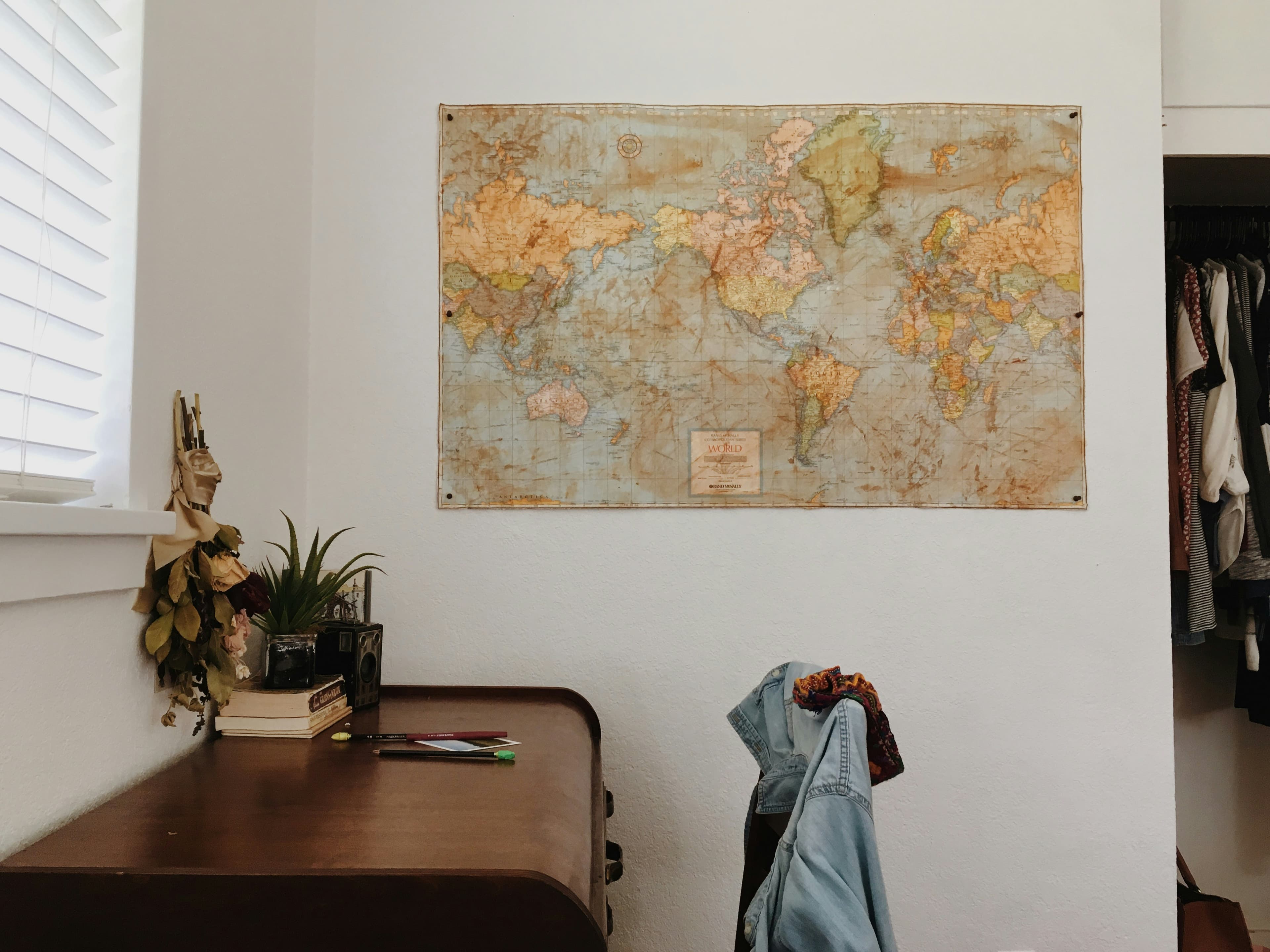
For decades, the scratch-off map was the undisputed king of travel tracking. A colorful, tactile poster that hung in your living room—each golden country revealed was a badge of honor. But as our travels have become more complex and our memories more digital, the scratch map has started to feel less like a trophy and more like a relic.
The way we travel has changed. We take more trips, visit more countries, and capture more moments than ever before. In 2026, a single traveler might visit three or more countries in a year. Our memories are scattered across social media highlights, camera rolls, and the occasional journal entry. The question is no longer just where you've been. It's how you remember it, how you share it, and how you keep the story alive.
This guide explores the evolution of travel tracking—from physical maps to digital globes—and makes a case for the digital map as the most powerful, clutter-free, and shareable way to document your journey.
The Tried and Tested: Physical Travel Maps
The Scratch-Off Map
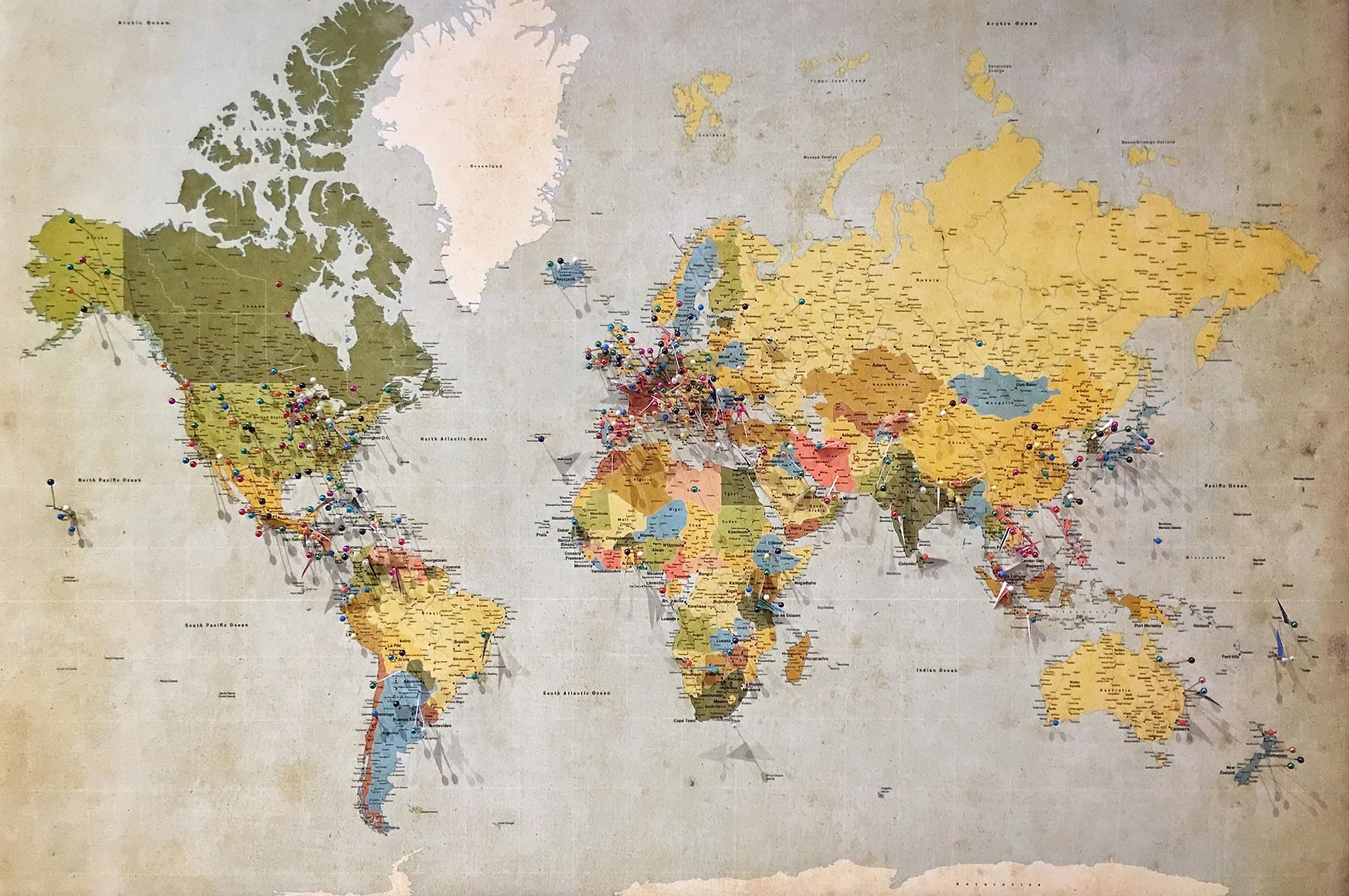
The scratch-off map is the classic visual tracker. It’s a large world map covered in a gold or silver foil, and you scratch off the countries you've visited. The satisfaction is immediate and tangible. It’s a conversation starter, a piece of art for your wall, and a constant visual reminder of your progress.
The Appeal:
- Tangible & Visual: It's a physical object that provides a clear, at-a-glance view of your travels. It feels like a real achievement to reveal a new country.
- Motivational: A blank map is a call to action. It inspires you to plan your next trip to fill in the gaps. It also taps into the psychology of collection and achievement, much like a set of digital badges, which we now know is a powerful driver for exploration.
The Limitations:
- One-Dimensional: A scratch map only shows the country. It doesn't record the date of your visit, the city, the people you met, or the story behind the trip. The memory is lost in the gold foil.
- No Room for Nuance: You can't distinguish between a two-hour layover and a week-long vacation. It just shows the country as "visited."
- Static & Cluttered: It stays in your home. You can't share it easily on social media, and once it's scratched, there's no way to update it digitally. The "Scratchmap" feature in apps like "Places Been" is a digital nod to this, offering the flag view but without the wall space commitment.
The Travel Journal
A travel journal is the antithesis of the scratch map. It's not about the count; it's about the story. As the saying goes, the best travel maps turn each country into a story. A journal is a deeply personal place for capturing the sights, sounds, smells, and feelings of your journeys.
The Appeal:
- Personal & Creative: You can write, draw, paste in tickets, and create a unique, one-of-a-kind record of your trip. It's a true creative outlet.
- Detailed Memories: It captures the narrative, not just the destination. It records the specific moments, the bad days, the unexpected storms, and the spontaneous reactions that make a trip unforgettable.
The Limitations:
- Time-Consuming: Maintaining a detailed journal takes time, discipline, and effort. The common trap is over-designing the system and then abandoning it.
- Not Searchable: Finding a specific memory from a trip five years ago requires flipping through pages, not a simple keyword search.
- Fragile & Personal: It's a physical object that can be lost, damaged, or is too private to easily share with a wider community.
Social Media: The Public Portfolio
Platforms like Instagram and Facebook have become the default way many of us share travel memories. It's immediate, public, and designed for visual storytelling.
The Appeal:
- Instant Sharing: You can post a photo from the top of a mountain in real-time and receive instant feedback from your community.
- Global Reach: Your travels are broadcasted to your friends, family, and followers. It's the modern photo album.
The Limitations:
- Fragmented: Your travel history is scattered across your feed, stories, and highlights. It's almost impossible to get a single, cohesive view of everywhere you've been.
- Curated, Not Comprehensive: You share the highlights, not the quiet, meaningful moments. It becomes a performance of your travels rather than a personal record.
- Platform Dependence: You're at the mercy of an algorithm and a platform that owns your content. It's not a dedicated travel archive.
The Digital Frontier: Interactive Globes and Travel Map Apps
This is where the modern traveler's toolkit gets its most powerful upgrade. Digital travel map apps have evolved to solve the problems of the physical world and social media. They offer a central, structured, and feature-rich way to track, document, and share your travels.
What Makes a Great Digital Travel Map?
The most effective digital travel maps go beyond simple pins. They offer features that turn a map into a living archive.
- Beyond Pins: A good travel map integrates blogging and photo integration. Each place marker should be a portal to stories, descriptions, and high-resolution photos, turning the map into a visual autobiography.
- A Low-Friction Workflow: The most common failure is creating a system that is too detailed to maintain. The best apps let you add a country, a month/year, a few sentences, and a photo in minutes. A tracker that gets updated in three minutes is better than a perfect one you never maintain.
- Visual Flexibility: While a 2D world map is great for seeing your entire global footprint at a glance, a 3D globe provides an immersive experience. It restores the accurate scale of our planet and makes your achievements feel more real.
The Benchmark: What Users Actually Look For
When choosing a travel map, users often prioritize:
- A Beautiful Visual Record: They want a map that looks good and is satisfying to fill in, much like a scratch map.
- A Detailed Log: The map must hold more than just a country name. It needs to store dates, notes, and photos.
- A "Bucket List" or "Wishlist": The ability to track where you want to go is almost as important as tracking where you've been.
- Motivation & Gamification: Milestones, badges, and stats turn tracking into a fun, addictive game that encourages exploration.
A Look at the Digital Map Landscape
The market is full of options, from simple apps to sophisticated social platforms.
- Places Been: This app, available on Google Play, lets users create a personal map, mark cities, and view detailed statistics about their travels. It features a flag map (a digital scratch-off) and can import from TripAdvisor.
- Countries Been: A similar app that focuses on creating a customized map of the world. You can track countries, states, and cities you've visited, lived in, or want to visit.
- Travu: This app allows you to "effortlessly track countries and cities been" and create a "detailed log of your travels".
- Polarsteps: A well-known app that emphasizes automated GPS tracking to create route blogs. You carry your phone, and the app builds a story of your travels automatically. However, the automated nature can sometimes feel less intentional.
- Mark O'Travel: An app that automatically fetches location info from your photo's metadata, allowing you to build a map by uploading your existing photos.
Each of these apps excels in different areas, but many have a few drawbacks: a lack of journal prompts, a boring user interface, or lack of support on web/desktop. The search for a modern, all-in-one solution with a focus on both beautiful cartography and rich storytelling is what has given rise to new platforms like Trippwiz.
Spotlight: Trippwiz and the Future of Travel Mapping
For travelers who want more than just a visual counter, Trippwiz offers a compelling alternative. It’s designed specifically to be a "map for travel tracking" that combines the visual satisfaction of a scratch map with the narrative depth of a travel journal. It falls into the category of a "travel map plus journal workflow," which is often the most useful version for any travel enthusiast—whether you travel once a year or every month.
How Trippwiz Elevates the Experience
1. The Best of Both Worlds: 3D Globe & 2D Map Trippwiz understands that sometimes you want the "big picture" of a flat 2D map and other times the immersive, astronaut-like view of a rotating globe. As noted in one of their resources, this dual-visualization strategy is vital for different use cases: the 2D map is perfect for a quick screenshot to share on social media, while the 3D globe is better for quiet moments of reflection when you want to relive the distance you have covered.
2. A Living Autobiography: Integrating Blogs and Photos Trippwiz moves beyond simple pins. Each place marker acts as a portal to your stories, visceral descriptions, and high-resolution photos. This turns your map from a simple list of names into a vibrant, interactive story of your life. The app's UX is optimized for mobile, making it easy to jot down entries and upload photos that automatically sync to the correct location.
3. The Psychology of Collection: Gamification Why do we feel such a rush when we check a new country off our list? As the Trippwiz article explains, it's a psychological phenomenon tied to the human desire for collection and achievement. Trippwiz taps into this by offering a sophisticated system of milestones, badges, and country flags. Gamification provides a sense of progression that keeps travelers motivated to explore beyond their comfort zones. Finding yourself thinking, "I only need one more country in South America to get the 'Andean Explorer' badge," is a powerful motivator.
4. A Clean, Intuitive UX One of the most common complaints about older travel map apps is that they suffer from "feature creep"—adding so many bells and whistles they become confusing. Trippwiz is praised for its superior UI and UX, staying lean and focused to ensure the map remains the hero of the experience. It feels like a premium, modern tool rather than a utility from 2012.
5. A Community-First Mindset Trippwiz is built with a social-first mindset, allowing you to share your 3D globe or specific blog entries with friends, family, or the wider community. This turns a private record into a source of inspiration and connection.
Conclusion: The Map That Tells Your Story
The way we track our travels has come a long way from the living room scratch map. While physical maps and journals have their charm, they can't match the power of a digital solution that keeps your memories alive, organized, and connected.
The best travel map is one that lets you mark countries quickly, define what counts as a visit, attach a few real memories, and return later without friction. It's a system that turns a simple "country tracker" from a novelty into something truly worth keeping—a personal, shareable, and ever-growing chronicle of your life's adventures.
Build your interactive travel map
Track every country you've visited on a stunning 3D globe. Add photos, stories, and share your journey — all free.
Also Read
Continue exploring our travel resources.
Travel Guides
The Global Guide to Flight Compensation: How to Get Paid for Delays, Cancellations, and Overbooking
A practical, region-by-region breakdown of flight compensation rights across the EU, US, UK, and India—with exact payout rules, the critical 4-hour delay trigger, and a step-by-step DIY claims process to file directly with airlines and skip commission-hungry middlemen.
10 min read
Travel Guides
The Transit Visa Blueprint: How to Know If You Need a Visa for an Airport Layover
Do I need a transit visa for a layover? Learn the rules for airside vs landside transit, terminal changes, and TWOV rules in 2026 to avoid being denied boarding.
11 min read
Comparison
3Pulse Travel Map Alternates and the Rise of Trippwiz
Looking for 3Pulse travel map alternates? Discover Trippwiz, the best map for travel tracking with 3D globes, badges, and blogging. Track your journey today!
11 min read