
How to Create a Travel Map and Track Countries Visited
Trippwiz Editorial
28 May 2026 • 9 min read
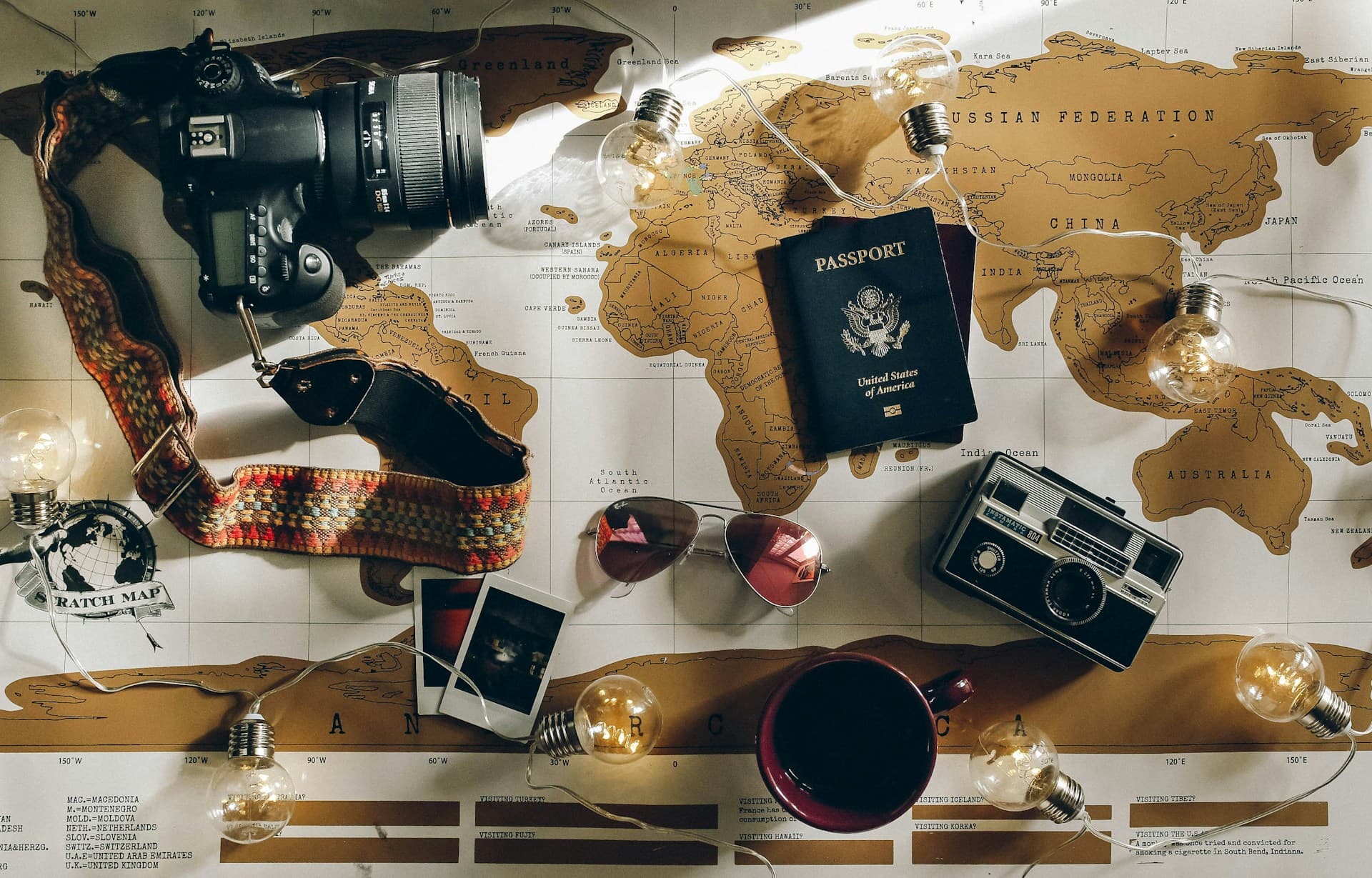
Tracking countries visited is not just about building a list. It is about watching your world expand and remembering what each place meant to you.
The best travel maps do something a plain checklist cannot. They turn each country into a story. One pin might remind you of the night market you stumbled into on your first evening in Bangkok. Another might bring back the train ride across Italy, the rain in Prague, or the friend you made on a short trip that should have been forgettable but was not.
Over time, that map becomes more than a visual record. It becomes a walk down memory lane. You can look at it and immediately reconnect with different phases of your life, the people you traveled with, the places that changed you, and the trips that made you want to keep going. That is also why a growing map can be quietly motivating. It does not just show where you have been. It reminds you there is still more of the world you want to experience.
But for a map to do that well, it cannot stop at logging visits. It needs just enough structure to capture the memory behind each country without becoming a chore to maintain.
Let us look at how to create a travel map that is actually useful, how to track countries visited without making the process tedious, and what to include if you want your map to double as a private journal or a shareable memory archive.
What this guide will help you do:
- A good travel map should capture memory, not just count countries.
- The best country tracker is one you can update quickly after each trip.
- Notes, dates, and photos matter more than raw totals.
- If the system feels heavy, you will stop using it.
The goal is not to create a perfect archive on day one. The goal is to build something you will keep returning to.
Why you might want a countries visited tracker in the first place
Most of us look for a travel map or country tracker for one of four reasons:
- they want to see their travel progress visually
- they want to remember specific trips better
- they want to share their travel story with friends or family
- they want one place to store country-level notes, photos, and memories
A plain checklist can help with the first goal. A real travel map can help with all four.
That difference matters because the best system is not always the most decorative one. A beautiful map with no dates, notes, or trip context becomes stale quickly. A slightly simpler map with real memories attached becomes useful for years.
The simplest way to think about a travel map
A practical travel map has three layers:
- A visual record of countries or places visited
- A structured trip history with dates or visit order
- A memory layer with notes, photos, or small journal entries
Most people start with layer one and stop there. That is why their map looks good for a week and then stops being meaningful.
If you want your tracker to stay useful, you will need at least a little of layers two and three.
What should count as a visited country?
This is one of the first places travelers get stuck.
Some people count only countries where they stayed overnight. Others count airport exits, cruise stops, border crossings, or even same-day visits. There is no universal rule, but there should be a personal rule.
Choose a rule you can apply consistently.
A simple approach is:
- Count it if you legally entered the country and spent meaningful time there
- Do not count it if you only transited through the airport without entering
- Mark uncertain cases separately instead of forcing them into yes or no
That last part is useful. Many travel memories sit in a gray zone. Instead of arguing with yourself, give those visits a separate label such as transit, stopover, or short visit.
Your options for tracking countries visited
There are four common approaches.
1. Spreadsheet or notes app
This is the simplest starting point.
It works well if you only want a country list with dates. It breaks down when you want photos, visual map output, or an easy way to review your travel history.
Best for:
- travelers starting from scratch
- people who want a private list only
- users who do not care about map visuals
2. Scratch-off maps or static posters
These are fun as decor, but they are weak as tracking systems.
They show progress, but not trip details. You cannot attach notes, distinguish multiple visits, or search for a memory later.
Best for:
- visual motivation
- home decor
- casual tracking
3. Generic map apps
These are stronger because they handle the visual side better, but many still focus too much on counting countries and not enough on the story behind them.
If you choose this route, look for something that lets you save notes, dates, or photos at the country level.
Best for:
- travelers who want a clean visual tracker
- users who want something faster than spreadsheets
4. Travel map plus journal workflow
This is often the most useful version for any travel enthusiast, whether you travel once a year or every month.
Instead of just marking a country as visited, you also capture what happened there. A short note, one photo, and one memory line is usually enough to make the map meaningful.
Best for:
- first-time international travelers who want to start documenting early
- occasional travelers who do not want to forget trip details over time
- frequent travelers who want one structured place for memories and progress
- anyone who wants both memory preservation and shareable map output
Google Maps and Apple Maps vs a dedicated travel map tracker
It is a fair question: if you already use Google Maps or Apple Maps, do you need a separate travel map tracker?
For navigation and place lookup, both are excellent. They can also help you revisit location history in some cases.
But they are not designed as travel accomplishment or country-story tools.
In practice, most travelers run into these limits:
- no dedicated countries-visited progress view
- no simple country-by-country storytelling workflow
- limited structure for attaching journal-style notes to each country visit
- no clean, shareable globe-style travel image that reflects your overall journey
So yes, they can technically track where you have been. But if your goal is to build a memory-rich travel map that shows progress and tells your story, a dedicated tracker is usually a better fit.
What to include in each country entry
If you want your map to stay useful, keep each entry light but structured.
A good country entry usually includes:
- country name
- month or year visited
- city or route context
- one short memory or story note
- one practical detail you may want later
- one photo if available
That practical detail matters more than most people expect. It could be the neighborhood you stayed in, the best train route, the visa difficulty, or a food place you still remember. Those tiny details are what make the record feel personal instead of generic.
A low-friction workflow you will actually maintain
The most common failure is over-designing the system.
You might imagine writing a detailed journal entry after every trip. In practice, most of us do not.
A better workflow looks like this:
- After each trip, mark the country as visited
- Add the month and year
- Write one or two sentences about what stood out
- Upload one representative photo
- Leave the rest for later if you want
That is enough.
A tracker that gets updated in three minutes is better than a perfect tracker you never maintain.
How to make the map feel personal instead of generic
A lot of country tracker tools reduce travel into a number.
That works for social sharing, but it is not enough for memory.
To make the map feel like your own, add one layer of specificity:
- your first impression of the country
- a small story from the trip
- what surprised you most
- what you would do differently next time
- who you traveled with
These are small additions, but they change the map from a scoreboard into a personal archive.
Common mistakes when building a travel map
Here are the problems that usually make us abandon the idea:
- Trying to rebuild their entire travel history in one sitting
- Using a system that is too detailed to maintain
- Tracking countries without saving any memories
- Not deciding what counts as a visit
- Using a tool that looks nice but makes updates slow
The fix is usually the same: keep the structure simple, then add depth only where it matters.
What to do if you already have years of travel history
If you are starting late, do not wait until you can reconstruct everything perfectly.
Start with the obvious countries first. Then work backward using:
- old passport stamps
- email confirmations
- photo timestamps
- cloud photo albums
- chat history or calendar entries
You do not need to recover every detail immediately. Build the map in layers. First mark the countries. Then add dates where you know them. Then add memories to the trips that mattered most.
This approach keeps the project manageable.
How a travel map becomes more useful over time
A good map starts as a tracker but becomes something else later.
After enough trips, it becomes:
- a personal travel timeline
- a memory archive
- a visual summary of your life stage and travel patterns
- an easy way to revisit old stories without digging through folders
That is why the best map systems are not just about where you have been. They help you remember why each trip mattered.
Where Trippwiz fits naturally
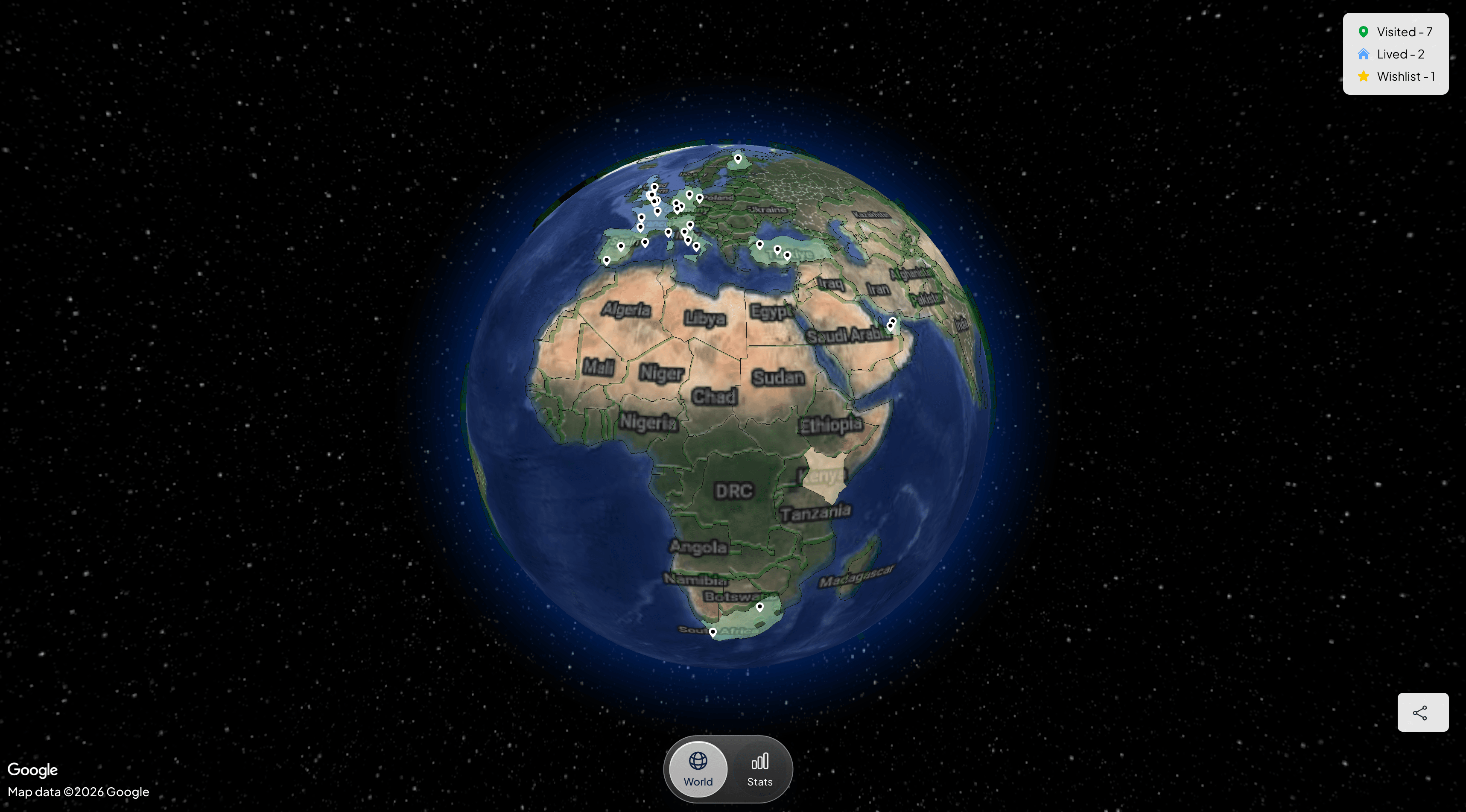 If you want one place where your map, trip notes, and country memories can live together, Trippwiz fits naturally.
You can mark the countries you have visited, then add country journals with photos, notes, and trip details instead of leaving those memories scattered across different apps. That makes the map more than a visual counter. It becomes a personal record of your travel history.
That is especially useful if you want to keep some entries private, share others, or slowly build a travel timeline that feels more complete each time you return to it.
Final takeaway
If you want to create a travel map that stays useful, do not optimize for decoration alone. Optimize for consistency.
The best travel map is one that lets you:
- mark countries quickly
- define what counts as a visit
- attach a few real memories
- return later without friction
That is what turns a country tracker from a novelty into something worth keeping.
Sources and review
- Traveler workflow recommendations based on common country-tracking and journaling use cases.
- Product-fit guidance aligned with Trippwiz map and country journal experience.
- Last reviewed: May 2026.
Build your interactive travel map
Track every country you've visited on a stunning 3D globe. Add photos, stories, and share your journey — all free.
Also Read
Continue exploring our travel resources.
Travel Guides
Beyond Scratch Maps: Creative Ways to Track, Document, and Share Your Travel History
From scratch maps to digital globes—this guide compares travel trackers and shows how apps like Trippwiz turn your journeys into a shareable, memory-rich visual story.
9 min read

Travel Guides
The Global Guide to Flight Compensation: How to Get Paid for Delays, Cancellations, and Overbooking
A practical, region-by-region breakdown of flight compensation rights across the EU, US, UK, and India—with exact payout rules, the critical 4-hour delay trigger, and a step-by-step DIY claims process to file directly with airlines and skip commission-hungry middlemen.
10 min read
Travel Guides
The Transit Visa Blueprint: How to Know If You Need a Visa for an Airport Layover
Do I need a transit visa for a layover? Learn the rules for airside vs landside transit, terminal changes, and TWOV rules in 2026 to avoid being denied boarding.
11 min read